In the ever-evolving world of recruitment, companies are continuously seeking ways to improve efficiency, accuracy, and fairness in their hiring processes. As digital transformation accelerates across industries, one of the most profound shifts has been the adoption of AI-powered coaching tools in recruitment replacing traditional human-led interview preparation. This technology isn’t just a trend, it’s reshaping the very foundation of how companies evaluate talent and how candidates prepare for career advancement.
While traditional coaching methods remain relevant, AI-powered interview coaching has the potential to deliver personalized, scalable, and data-driven insights that human coaches simply cannot match. This article will explore why AI leads the way in the future of career coaching, examining its benefits, addressing its limitations, and outlining how it is transforming recruitment for both job seekers and employers.
The Need for Speed: How AI Transforms Recruitment Efficiency
Hiring people often take too long, feels complicated, and wastes time and effort. Human recruiters sift through hundreds of resumes, conduct multiple interview rounds, and still might miss the ideal candidate. The challenges are particularly acute for large organizations, where processing large volumes of applicants can create bottlenecks that delay hiring and increase costs.
AI-powered mock interview systems streamline this process by automating candidate assessments in a way that traditional coaching simply cannot. With the ability to evaluate a candidate’s performance in real-time, assessing their responses, communication skills, confidence, and even cultural fit AI drastically reduces time-to-hire. A study by McKinsey & Company found that AI can cut recruitment times by 40%, significantly enhancing organizational efficiency and improving employee retention by identifying candidates who are truly aligned with the company’s needs and culture.
These systems offer immediate, detailed feedback on interview performance. For example, an AI-powered platform might analyze a candidate’s response to a behavioural interview question using the STAR method (Situation, Task, Action, Result) and provide real-time suggestions on how to improve the answer. This speed and accessibility make AI-powered mock interviews far superior in quickly preparing candidates and assisting employers in making quicker, more informed decisions.
Scalable Personalization: A New Standard for Candidate Preparation
One of the main limitations of traditional coaching lies in its lack of scalability. Human coaches can only handle a limited number of clients, and even if they provide personalized feedback, they can’t scale this approach across large organizations or hundreds of job seekers without sacrificing quality.
AI-powered coaching, on the other hand, can offer highly personalized experiences to thousands of candidates at once. These systems assess individual resumes, understand career goals, and simulate interview scenarios based on the candidate's specific role and company culture. By analyzing massive amounts of data, AI platforms provide tailored feedback that reflects both the job’s requirements and the candidate’s experience level.
Unlike traditional coaching, which may rely on a one-size-fits-all approach, AI is continually learning and evolving. As a result, it adapts to each individual’s unique strengths and weaknesses and delivers insights accordingly. This level of personalization at scale is invaluable, particularly for companies aiming to provide interview training across multiple job roles or geographies without needing additional resources.
The Data Advantage: Why AI Reduces Bias and Enhances Objectivity
A significant advantage of AI-powered mock interviews over traditional coaching is the ability to reduce bias. Human recruiters, even with the best intentions, are often influenced by unconscious biases related to a candidate’s appearance, age, gender, or other non-job-related factors. AI systems, by contrast, evaluate candidates based purely on data, including their skills, experience, and interview performance.
AI tools eliminate the subjectivity that can skew traditional hiring processes, offering a level of fairness that is difficult for human interviewers to achieve consistently. By focusing on objective performance metrics, AI ensures that every candidate is assessed equally, fostering a more inclusive recruitment process. Bias in hiring can significantly hinder diversity, but AI-driven systems ensure that candidates are evaluated on their merit alone, creating a more equitable talent acquisition process.
Moreover, AI continuously collects data on interview trends, helping companies identify and eliminate patterns that could indicate bias, further strengthening its role as an objective evaluator.
AI vs Traditional Coaching: Flexibility, Convenience, and Cost-Effectiveness
Another significant benefit of AI over traditional coaching is its cost-effectiveness and flexibility. Traditional coaching can be expensive, especially if the coach is a high-level expert with specialized experience. It also comes with time constraints both for the coach and the candidate. Scheduling sessions with human coaches can be time-consuming, often requiring significant lead time and flexibility from both parties.
AI-powered coaching, on the other hand, offers on-demand access to training, with no need to schedule or coordinate with a coach. Job seekers can practice interviews whenever they choose, regardless of their time zone or schedule. Furthermore, AI systems are priced in a way that makes them accessible to a wider audience, from job seekers and entry-level professionals to HR departments looking to scale their recruitment efforts.
By offering unlimited access to mock interviews, instant feedback, and personalized learning, AI-powered tools democratize career coaching, making it affordable for individuals and organizations alike.
The Human Touch: Why Traditional Coaching Still Matters
While AI is making good results, it is important to acknowledge the value of traditional coaching. Human coaches bring empathy, personal experience, and mentorship to the table. For certain aspects of career development such as long-term career advice, strategic decision-making, and emotional support during job transitions, traditional coaching remains an irreplaceable resource.
Moreover, AI tools are limited in their ability to provide motivational support or help candidates navigate the emotional aspects of job searching. A human coach can be a trusted advisor throughout the career journey, providing not only feedback but also guidance, networking opportunities, and personalized insight that AI lacks.
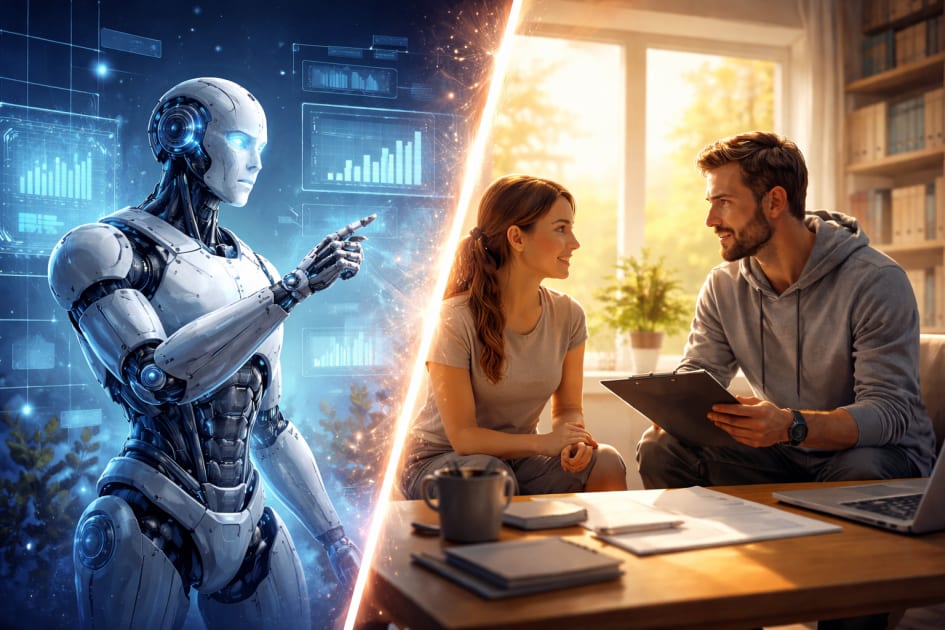
The most effective approach, therefore, may lie in a hybrid model where AI and traditional coaching work together. AI tools can help candidates prepare for the technicalities of the interview process, while human coaches provide the mentorship and guidance needed for broader career development.
Conclusion: Embracing the Future of Career Coaching
AI-powered mock interviews represent a game-changer in the world of recruitment. The ability to personalize coaching at scale, provide real-time feedback, and reduce bias has made AI a critical tool for both job seekers and employers. However, traditional coaching is not obsolete. Rather, the future lies in blending AI-driven efficiency with the emotional intelligence and mentorship provided by human coaches.
As the recruitment landscape continues to evolve, embracing AI-powered coaching tools will ensure that job seekers are better prepared, employers are more informed, and the hiring process becomes more efficient and equitable. AI is leading the way, but traditional coaching still has its place in guiding candidates toward long-term career success. The key is finding the right balance between technology and the human touch.